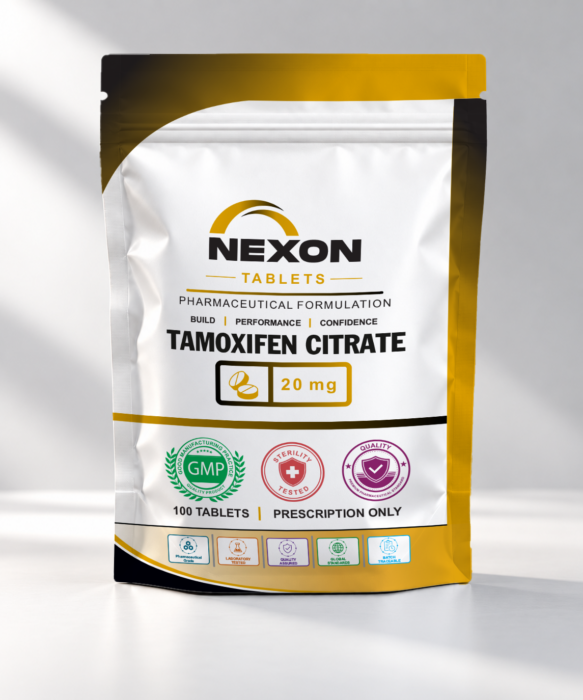
Tamoxifen Citrate 20 mg
Tamoxifen citrate is an orally active, nonsteroidal selective estrogen receptor modulator. Each tablet in this fictional NEXON catalog presentation provides tamoxifen citrate equiv…
- Dosage Form / Route Oral Administration
- Drug Class Selective Estrogen Receptor Modulator
Product Specifications
| Dosage Form / Route | Oral Administration |
|---|---|
| Composition | Tamoxifen Citrate (C32H37NO8 (Tamoxifen Citrate)) |
| Drug Class | Selective Estrogen Receptor Modulator |
| Chemical Formula | C32H37NO8 (Tamoxifen Citrate) |
This page is for product information only. NEXON does not sell products online through this website.
Scientific Profile
Detailed information
Introduction
Tamoxifen citrate is an orally active, nonsteroidal selective estrogen receptor modulator. Each tablet in this fictional NEXON catalog presentation provides tamoxifen citrate equivalent to 20 mg of tamoxifen.
It binds estrogen receptors and produces tissue-selective antagonist or partial agonist effects, limiting estrogen-dependent signaling in breast tissue while retaining estrogen-like activity in some other tissues.
History
Tamoxifen was synthesized during antiestrogen research in the 1960s and entered clinical use in the 1970s, becoming an established endocrine therapy in hormone-receptor-positive breast cancer management.
The 20 mg oral tablet became a standard pharmaceutical presentation. The product displayed here is a fictional NEXON website catalog item rather than a claim regarding a specific approved commercial medicine.
Approved indications, prescribing requirements, contraindications, legal classification, and availability depend on the jurisdiction and the exact manufactured product.
Chemical Structure
Tamoxifen citrate is the citrate salt of a nonsteroidal triphenylethylene compound. The salt has the molecular formula C32H37NO8 and an approximate molar mass of 563.64 g/mol. NEXON • ESTROGEN CONTROL & HORMONAL SUPPORT • 2 Its triphenylethylene framework supports selective estrogen-receptor modulation. Tablets supply the citrate salt, commonly expressed as the equivalent amount of tamoxifen free base, without ester hydrolysis.
- Nonsteroidal triphenylethylene framework
- Citrate salt pharmaceutical form
- Selective estrogen-receptor modulation
- Formation of active metabolites including endoxifen
- Oral tablet formulation
Pharmacology
After oral administration, tamoxifen citrate is absorbed through the gastrointestinal tract. Tamoxifen and active metabolites bind estrogen receptors and modify receptor-dependent gene transcription in a tissue- selective manner.
In breast tissue, receptor occupancy limits estrogen-driven signaling. Hepatic metabolism forms active metabolites, including 4-hydroxytamoxifen and endoxifen, that contribute substantially to pharmacological activity. Oral Tamoxifen Citrate → Gastrointestinal Absorption → Active Metabolite Formation → Estrogen Receptor Modulation
NEXON • ESTROGEN CONTROL & HORMONAL SUPPORT • 3 Tamoxifen citrate is not an anabolic-androgenic steroid or an aromatase inhibitor. It does not eliminate estrogen production and may exert estrogen-antagonist or partial-agonist effects according to tissue and physiological context.
Mechanism of Action
The primary mechanism involves:
- Disintegration and dissolution of the oral tablet
- Gastrointestinal absorption of active tamoxifen citrate
- Hepatic metabolism through CYP3A4, CYP2D6, and related pathways
- Binding of tamoxifen and active metabolites to estrogen receptors
- Reduced estrogen-dependent transcription in breast tissue
- Tissue-selective partial agonist effects outside breast tissue
- Slow elimination of parent drug and metabolites
- Tamoxifen citrate modifies estrogen-receptor signaling; it does not directly inhibit estrogen synthesis or
- immediately remove estrogen already present in circulation.
Pharmacodynamics
- Competitive binding to estrogen receptors
- Reduced estrogen signaling in breast tissue
- Tissue-selective partial agonist activity
- Hypothalamic-pituitary-gonadal feedback
- Bone and mineral metabolism
- Lipid, coagulation, and cardiovascular physiology
- Reproductive and endometrial function
- Secondary estrogen-responsive effects
ESTROGEN BIOSYNTHESIS Tamoxifen citrate does not directly suppress estrogen biosynthesis but may influence the response to circulating estrogen through:
- Competitive estrogen-receptor occupancy
- Reduced estrogen-dependent signaling in breast tissue
- Tissue-selective agonist and antagonist activity
- Modification of estrogen-responsive gene transcription
- Effects of active metabolites such as endoxifen
- Endocrine feedback mechanisms
- The magnitude of receptor modulation depends on dose, adherence, metabolic capacity, concurrent
- therapy, hormonal status, health, and individual physiology.
Pharmacokinetics
Following oral administration, tamoxifen citrate is absorbed from the gastrointestinal tract. Exposure depends on tablet dissolution, gastrointestinal physiology, hepatic function, concurrent substances, metabolic genotype, and adherence.
Tamoxifen undergoes extensive hepatic metabolism, including pathways involving CYP3A4, CYP2D6, CYP2C9, and CYP2C19. Active metabolites such as endoxifen and 4-hydroxytamoxifen contribute to receptor modulation.
The parent compound and metabolites persist for prolonged periods and are eliminated mainly through fecal pathways. Strong metabolic inhibitors or inducers may alter active-metabolite exposure.
The complete pharmacokinetic profile of this fictional 20 mg tablet depends on the validated formulation and has not been established through independent product-specific clinical studies.
NEXON • ESTROGEN CONTROL & HORMONAL SUPPORT • 5
Physiological Effects
Through tissue-selective estrogen-receptor modulation, tamoxifen citrate may influence estrogen- dependent breast tissue, endometrium, bone metabolism, lipid parameters, coagulation, reproductive physiology, thermoregulation, and mood.
Its effects differ from aromatase inhibitors because receptor modulation changes the response to estrogen rather than globally reducing estrogen production throughout the body.
Inappropriate or excessive exposure can produce clinically significant adverse effects, including thromboembolic events, uterine changes, vasomotor symptoms, reproductive effects, hepatic abnormalities, and visual disturbances.
Clinical Applications
Approved tamoxifen products are used in selected patients for hormone-receptor-positive breast cancer, including adjuvant and metastatic treatment, and for risk reduction in specific high-risk or ductal carcinoma in situ settings.
Clinical use requires an exact approved product, confirmed indication, contraindication review, pregnancy assessment, interaction evaluation, and appropriate medical and laboratory monitoring.
The displayed 20 mg tablet is a fictional NEXON catalog item and should not be interpreted as an independently approved medicinal product.
Safety Considerations
Tamoxifen exposure requires consideration of thromboembolic, cardiovascular, uterine, hepatic, ocular, endocrine, reproductive, metabolic, neurological, and psychological health.
Important safety considerations include:
- Venous thromboembolism and pulmonary embolism risk
- Stroke and cardiovascular health
- Uterine and endometrial changes
- Liver function and triglycerides
- Visual symptoms and ocular health
- Menopausal and endocrine status
- Reproductive function and pregnancy risk
- Tumor response and possible early flare phenomena
- Oral formulation tolerability
- Medication, anticoagulant, and metabolic interactions
- The safety profile depends on dose, indication, formulation, duration, individual response, underlying
- health conditions, and concurrent therapy. Medical supervision is essential whenever tamoxifen citrate
- is prescribed.
- Unsupervised use to manipulate estrogen signaling can cause serious harm and does not provide a
- reliable substitute for clinical assessment, interaction review, or laboratory-guided treatment.
NEXON • ESTROGEN CONTROL & HORMONAL SUPPORT • 6
Potential Adverse Effects
Potential adverse effects may involve vasomotor, thromboembolic, cardiovascular, uterine, reproductive, hepatic, ocular, gastrointestinal, dermatological, neurological, and psychological systems.
- Endocrine and Vasomotor Effects
- Hot flushes
- Changes in estrogen-receptor signaling
- Alterations in reproductive hormone balance
- Menstrual irregularity or ovarian-function changes
- Vaginal discharge, dryness, or bleeding
- Changes in sexual function
- Cardiovascular and Metabolic Effects
- Venous thrombosis or pulmonary embolism
- Stroke or other vascular events
- Cardiovascular events in susceptible individuals
- Changes in lipid profile or triglycerides
- Fluid retention or leg cramps
- Skeletal and Musculoskeletal Effects
- Bone or musculoskeletal discomfort
- Menopausal-status-dependent bone effects
- Arthralgia or joint stiffness
- Tumor flare or hypercalcemia in susceptible patients
- Dermatological Effects
- Rash
- Pruritus
- Hair thinning
- Rare severe skin reactions
- Hypersensitivity reactions
- Reproductive Effects
- Potential fetal harm
- Changes in fertility or menstrual function
- Endometrial hyperplasia, polyps, or uterine changes
- Increased risk of endometrial cancer or uterine sarcoma
- Changes in libido or sexual function
- Hepatic and Neurological Effects
- Changes in liver-function parameters
- Rare fatty liver, hepatitis, or clinically significant injury
- Headache, dizziness, or fatigue
- Mood or sleep changes
NEXON • ESTROGEN CONTROL & HORMONAL SUPPORT • 7 • Visual disturbance, cataract, or retinal effects
Oral Formulation Related Effects • Gastrointestinal discomfort • Nausea or appetite changes • Hypersensitivity to tamoxifen citrate or excipients • Tablet intolerance related to formulation ingredients • Medication errors involving tablet strength or frequency The occurrence and severity of adverse effects vary according to indication, exposure, duration, individual response, underlying health conditions, and concurrent medications.
Contraindications
Condition Reason
Known Hypersensitivity Risk of allergic reaction to tamoxifen citrate or excipients
Pregnancy Potential fetal harm and pregnancy loss
Breastfeeding Potential infant exposure and serious adverse reactions
Concurrent Coumarin Anticoagulant in Risk Official labeling may contraindicate this combination Reduction
History of DVT or Pulmonary Embolism in Risk Elevated risk of recurrent thromboembolic events Reduction
Unexplained Vaginal Bleeding Requires clinical assessment before or during therapy
Severe Uncontrolled Thromboembolic Risk Requires individualized specialist benefit-risk assessment
Incompatible Concomitant Therapy Potential loss of efficacy or increased toxicity
Drug Interactions
Potential interactions or important clinical considerations may exist with:
- Coumarin-type anticoagulants such as warfarin
- Strong CYP2D6 inhibitors
- Strong CYP3A4 or other enzyme inducers
- Estrogen-containing hormonal therapies
- Cytotoxic anticancer therapies
- Other endocrine or estrogen-receptor therapies
- Medicines affecting coagulation or platelet function
- Drugs affecting hepatic metabolism
- Laboratory tests influenced by hormonal status
NEXON • ESTROGEN CONTROL & HORMONAL SUPPORT • 8 Anticoagulants may require close monitoring, while strong CYP2D6 inhibitors may reduce formation of active endoxifen. Interaction significance depends on the medicine, indication, health condition, and individual response.
Laboratory Monitoring
Laboratory Test Purpose
Pregnancy Testing Exclude pregnancy when clinically relevant
CBC General hematological assessment during systemic therapy
ALT / AST Liver-function assessment
Lipid Profile / Triglycerides Metabolic and cardiovascular-risk assessment
Coagulation / INR Monitor clinically relevant anticoagulant interactions
Clinical Thromboembolic Review Assess symptoms and risk factors for DVT, PE, or stroke
Gynecological Assessment Evaluate abnormal bleeding or uterine symptoms
Ophthalmic Assessment Evaluate visual symptoms or ocular effects
Calcium Assess hypercalcemia when clinically indicated
Medication Interaction Review Assess CYP2D6, CYP3A4, anticoagulant, and hormonal interactions
Clinical Response Review Monitor disease response, tolerability, and treatment adherence
Storage & Stability
- Store according to official product labeling.
- Protect from excessive heat, moisture, and direct sunlight.
- Keep the container tightly closed.
- Maintain original packaging integrity.
- Keep away from children.
- Inspect tablets and packaging before use.
- Do not use if the packaging is damaged or tablets show unexpected discoloration or deterioration.
- Storage requirements depend on the validated tablet formulation.
Product Authenticity
Every genuine NEXON product should include appropriate quality-verification features.
- Batch-number tracking
- Manufacturing information
- Expiration-date verification
- QR authentication system
- NEXON • ESTROGEN CONTROL & HORMONAL SUPPORT • 9
- • Tamper-evident packaging
- Authorized-distribution verification
- emphasizes transparency, traceability, and product-quality control.
Frequently Asked Questions
What is Tamoxifen Citrate 20 mg? It is a fictional oral tablet presentation supplying tamoxifen citrate equivalent to 20 mg of tamoxifen per tablet.
What class of medicine is tamoxifen citrate? It is a nonsteroidal selective estrogen receptor modulator used in selected estrogen-dependent clinical settings.
What does 20 mg represent? It is the labeled equivalent amount of tamoxifen supplied by the citrate salt in each tablet.
Is tamoxifen citrate an anabolic steroid? No. It is a selective estrogen receptor modulator, not an anabolic-androgenic steroid.
Is tamoxifen citrate an aromatase inhibitor? No. It modulates estrogen receptors rather than inhibiting estrogen synthesis.
Is it oral or injectable? This product is presented as an oral tablet.
Does tamoxifen citrate eliminate all estrogen? No. It changes receptor signaling in a tissue-selective manner and does not eliminate estrogen production.
Can tamoxifen citrate cause serious adverse effects? Yes. Important risks can include thromboembolic events, stroke, uterine malignancy, hepatic effects, and visual changes.
Does tamoxifen citrate require medical supervision? Yes. Appropriate indication, contraindication review, interaction assessment, monitoring, and clinician- directed dosing are important.
Is this specific NEXON 20 mg formulation FDA approved? No. The displayed 20 mg tablet is a fictional catalog item and is not presented as an independently FDA- approved medicine.
Quality Commitment
is committed to maintaining high standards of manufacturing quality, product consistency, traceability, and scientific transparency. NEXON • ESTROGEN CONTROL & HORMONAL SUPPORT • 10 Through quality-control systems, authentication procedures, and responsible information sharing, NEXON aims to provide reliable pharmaceutical products and educational resources for healthcare professionals and informed users.
Related
More in this category

Creatine Formula
Creatine Formula is an oral sports-nutrition preparation centered on creatine, a naturally occurring compound involved in rapid cellular energy regeneration. Creatine is stored pre…

Beta-Alanine
Beta-Alanine is a naturally occurring non-proteinogenic amino acid that serves as an important precursor for synthesis of carnosine in skeletal muscle. Unlike conventional alpha-am…

Branched-Chain Amino Acid Formula
Branched-Chain Amino Acids are a group of three essential amino acids consisting of L-leucine, L-isoleucine and L-valine. Their characteristic branched molecular structures disting…