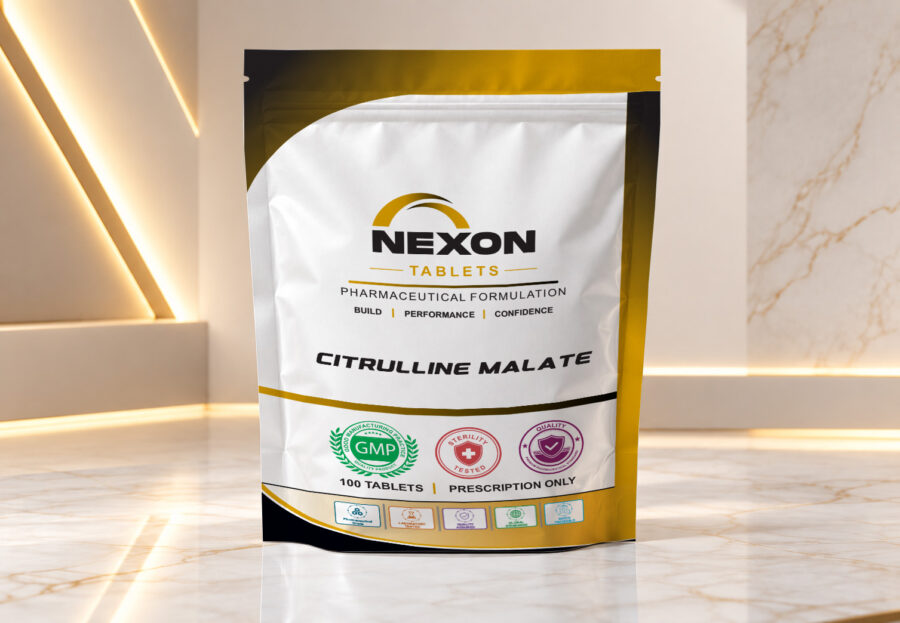
Creatine Formula
Creatine Formula is an oral sports-nutrition preparation centered on creatine, a naturally occurring compound involved in rapid cellular energy regeneration. Creatine is stored pre…
- Dosage Form / Route Oral Administration
- Drug Class Sports Nutrition / Ergogenic Supplement
Product Specifications
| Dosage Form / Route | Oral Administration |
|---|---|
| Composition | Creatine-Based Formula |
| Drug Class | Sports Nutrition / Ergogenic Supplement |
This page is for product information only. NEXON does not sell products online through this website.
Scientific Profile
Detailed information
Introduction
Creatine Formula is an oral sports-nutrition preparation centered on creatine, a naturally occurring compound involved in rapid cellular energy regeneration. Creatine is stored predominantly in skeletal muscle as free creatine and phosphocreatine, where it contributes to restoration of adenosine triphosphate during periods of high energy demand. Creatine supplementation is among the most extensively researched nutritional strategies for supporting high-intensity exercise performance and training adaptation.
NEXON
History
Creatine was identified during early investigations into the chemical composition of skeletal muscle. Subsequent discovery of phosphocreatine and the creatine kinase reaction established its central role in cellular bioenergetics. During the late twentieth century, creatine supplementation became increasingly prominent in sports nutrition, followed by extensive controlled research examining exercise performance, muscle physiology and long-term safety.
NEXON
Chemical Structure
Creatine is chemically known as methylguanidinoacetic acid and contains a guanidino functional group linked to an acetate- derived structure. Creatine monohydrate consists of a creatine molecule associated with water and represents the most extensively studied supplemental form. Alternative creatine compounds also exist, although they differ in chemical composition and supporting evidence.
NEXON
Pharmacology
The physiological activity of creatine is primarily associated with expansion and maintenance of intracellular creatine and phosphocreatine availability. Increasing muscle creatine stores can enhance the capacity of the phosphagen energy system and support rapid ATP regeneration during repeated high-intensity muscular contractions.
NEXON
Mechanism of Action
Creatine participates in the reversible creatine kinase reaction. During periods of high energy demand, phosphocreatine donates a phosphate group to adenosine diphosphate to regenerate ATP. During recovery, available ATP can subsequently restore phosphocreatine reserves. This system provides rapid buffering of cellular energy availability during intense muscular activity.
NEXON
Pharmacodynamics
Supplemental creatine can increase intramuscular creatine and phosphocreatine stores. Increased availability of these compounds supports rapid ATP resynthesis and can improve capacity during repeated bouts of high-intensity exercise. Over time, improvements in training capacity may contribute to greater training adaptations when supplementation is combined with appropriate exercise.
NEXON
Pharmacokinetics
Following oral consumption, creatine is absorbed through the gastrointestinal tract and enters systemic circulation before uptake into tissues through specialized creatine transport mechanisms. Skeletal muscle represents the major storage compartment. Intracellular creatine may be phosphorylated to phosphocreatine, while a proportion undergoes spontaneous conversion to creatinine and is subsequently eliminated through the kidneys.
Physiological Effects
Creatine contributes to rapid cellular energy transfer, ATP buffering and maintenance of energy availability in metabolically active tissues. Supplementation can increase intramuscular creatine stores and has been associated with improvements in repeated high-intensity exercise capacity, training performance and certain measures of strength and lean mass when combined with appropriate training.
NEXON
Clinical Applications
Beyond sports nutrition, creatine has been investigated across aging, rehabilitation, neurological disorders, metabolic conditions and other clinical settings. Evidence and clinical significance vary substantially according to condition. These investigational applications should be distinguished from its extensively researched use as a nutritional ergogenic aid.
NEXON
Safety Considerations
Creatine monohydrate has an extensive human safety literature and is generally well tolerated in healthy individuals under studied conditions. Safety evaluation should nevertheless consider individual health status, existing renal disease and concurrent medical conditions. Evidence supporting other forms of creatine is generally less extensive than the evidence available for creatine monohydrate.
NEXON
Potential Adverse Effects
Potential effects may include gastrointestinal discomfort and increases in body mass, particularly as muscle creatine accumulation can influence intracellular water content. Controlled research does not support many commonly repeated claims that appropriate creatine supplementation inherently causes dehydration, muscle cramping or renal dysfunction in healthy individuals.
NEXON
Contraindications
Individuals with known hypersensitivity to formulation components or clinically significant underlying disease should seek appropriate professional assessment before supplementation. Pre-existing renal impairment or conditions affecting renal function require particular consideration. Pregnancy, breastfeeding and other special clinical circumstances should be evaluated individually.
NEXON
Drug Interactions
Creatine does not have an extensively established interaction profile comparable with conventional pharmaceutical agents. However, individuals receiving medications that influence renal function or fluid and electrolyte physiology should receive appropriate clinical evaluation before supplementation. Interaction considerations may also depend on additional ingredients included in a multi-component Creatine Formula.
NEXON
Laboratory Monitoring
Routine laboratory monitoring is generally unnecessary for conventional creatine supplementation in healthy individuals. Serum creatinine may increase or vary because creatinine is a metabolic breakdown product related to creatine metabolism, and interpretation of renal laboratory results should therefore consider supplemental creatine exposure and the broader clinical context.
NEXON
Storage & Stability
Creatine Formula powder should be stored according to validated product-specific stability information in a cool, dry environment protected from excessive moisture and inappropriate heat exposure. Powder packaging should remain properly sealed to maintain product integrity. Stability after dissolution differs from stability in the dry state and depends on environmental and formulation conditions.
NEXON
Product Authenticity
Product authenticity should be confirmed through batch identification, packaging integrity, traceability systems and appropriate quality-control documentation. Ingredient identity, purity and compositional accuracy are important considerations for sports-nutrition formulations. Any discrepancy involving labeling, packaging, batch information or physical appearance should be investigated.
NEXON
Frequently Asked Questions
Creatine is not an anabolic steroid and does not function through androgen receptors. Its primary physiological role is related to cellular energy transfer through the creatine-phosphocreatine system. Creatine monohydrate remains the most extensively researched supplemental form, and current evidence has not consistently demonstrated that alternative commercial forms provide superior physiological benefits.
NEXON
Quality Commitment
is committed to maintaining high standards of manufacturing quality, product consistency, traceability, and scientific transparency. Through appropriate quality-control systems, authentication procedures, manufacturing oversight, and responsible information sharing, NEXON aims to provide reliable nutritional products and educational information for healthcare professionals, athletes, and informed users. For powdered sports-nutrition formulations, particular emphasis is placed on ingredient identity, purity, compositional accuracy, product stability, blend uniformity, and batch-to-batch consistency.
NEXON
Related
More in this category
Beta-Alanine
Beta-Alanine is a naturally occurring non-proteinogenic amino acid that serves as an important precursor for synthesis of carnosine in skeletal muscle. Unlike conventional alpha-am…
Branched-Chain Amino Acid Formula
Branched-Chain Amino Acids are a group of three essential amino acids consisting of L-leucine, L-isoleucine and L-valine. Their characteristic branched molecular structures disting…
Tamoxifen Citrate 20 mg
Tamoxifen citrate is an orally active, nonsteroidal selective estrogen receptor modulator. Each tablet in this fictional NEXON catalog presentation provides tamoxifen citrate equiv…