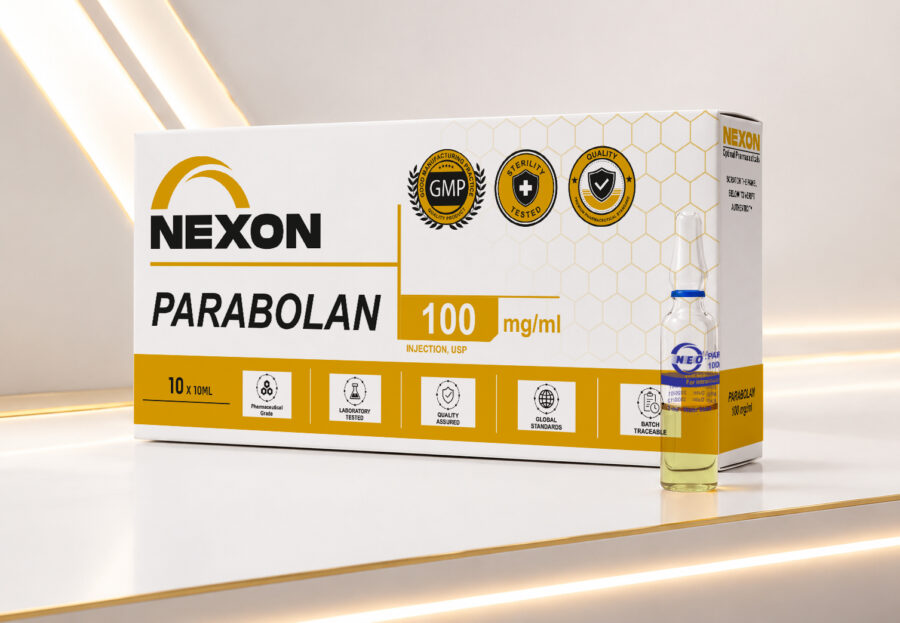
Trenbolone Hexahydrobenzylcarbonate
Trenbolone Hexahydrobenzylcarbonate, historically known as Parabolan, is a long-acting esterified form of trenbolone developed to provide prolonged hormone availability following i…
- Dosage Form / Route Intramuscular Injection
- Drug Class Anabolic Androgenic Steroid (AAS)
Product Specifications
| Dosage Form / Route | Intramuscular Injection |
|---|---|
| Composition | Trenbolone Hexahydrobenzylcarbonate (C₂₉H₃₈O₄) |
| Indications | Testosterone Replacement Therapy in Men With Confirmed Testosterone Deficiency |
| Drug Class | Anabolic Androgenic Steroid (AAS) |
| CAS Number | 23454-33-3 |
| Chemical Formula | C₂₉H₃₈O₄ |
| Molecular Weight | 450.61 g/mol |
| Half-Life | Approximately 10–14 Days |
| Ester Type | Long-Acting Trenbolone Ester |
This page is for product information only. NEXON does not sell products online through this website.
Scientific Profile
Detailed information
Introduction
Trenbolone Hexahydrobenzylcarbonate, historically known as Parabolan, is a long-acting esterified form of trenbolone developed to provide prolonged hormone availability following intramuscular administration.Trenbolone is a synthetic anabolic androgenic steroid structurally derived from 19-nortestosterone. Additional double bonds within the steroid nucleus produce a unique pharmacological profile characterized by exceptionally strong androgen receptor affinity.The hexahydrobenzylcarbonate ester slows absorption from the intramuscular depot, resulting in gradual release of active trenbolone into systemic circulation over an extended period.Compared with Trenbolone Acetate, Trenbolone Hexahydrobenzylcarbonate provides a substantially longer pharmacokinetic profile while maintaining sustained hormone exposure.Among all trenbolone esters, Parabolan remains one of the most historically recognized pharmaceutical formulations because it was previously marketed for limited human medical use before being discontinued.
NEXON
History
Trenbolone was originally developed during pharmaceutical research investigating anabolic steroid derivatives with enhanced anabolic activity.
To prolong biological activity, several esterified forms were introduced, including the hexahydrobenzylcarbonate ester.
Under the trade name Parabolan, Trenbolone Hexahydrobenzylcarbonate became one of the few trenbolone preparations previously approved for limited human therapeutic use in certain countries before eventual market withdrawal.
Although no longer widely available as a licensed pharmaceutical product, Parabolan remains an important compound in the historical development of anabolic steroid pharmacology.
Scientific investigation of trenbolone has contributed significantly to advances in:
- Androgen receptor pharmacology
- Anabolic steroid chemistry
- Protein metabolism
- Endocrine physiology
NEXON
Chemical Structure
Trenbolone Hexahydrobenzylcarbonate consists of the trenbolone molecule esterified with hexahydrobenzylcarbonic acid at the 17-beta hydroxyl position.
The ester significantly prolongs hormone release while preserving the biological activity of trenbolone following enzymatic hydrolysis.
- The enanthate ester primarily influences:
- Absorption rate
- Release duration
- Plasma availability
- Pharmacokinetic characteristics
Following enzymatic cleavage of the ester bond, biologically active trenbolone becomes available to interact with androgen NEXON
Pharmacology
Following intramuscular administration, Trenbolone Hexahydrobenzylcarbonate forms a long-lasting depot within muscle tissue.
The hexahydrobenzylcarbonate ester undergoes gradual enzymatic hydrolysis, releasing free trenbolone into systemic circulation over an extended period.
Once released, trenbolone binds with high affinity to androgen receptors located throughout multiple tissues including:
- Skeletal muscle
- Bone
- Bone marrow
- Connective tissue
- Skin
- Liver
- Reproductive tissues
Unlike testosterone, trenbolone is not considered a clinically significant substrate for aromatase and therefore does not undergo meaningful conversion to estradiol.
Conversion Pathway Enzyme Product Testosterone → DHT 5-alpha reductase Dihydrotestosterone Testosterone → Estradiol Aromatase Estradiol (E2)
NEXON
Mechanism of Action
Trenbolone produces its biological effects primarily through activation of intracellular androgen receptors.
The biological process includes:
- Trenbolone enters target cells.
- Trenbolone binds to androgen receptors.
- The receptor-hormone complex becomes activated.
- The activated complex translocates into the cell nucleus.
- Interaction with androgen response elements occurs on DNA.
- Gene transcription is regulated.
- Cellular protein synthesis and tissue-specific physiological responses are influenced.
Activation of androgen receptors contributes to:
- Protein synthesis
- Nitrogen retention
- Muscle tissue maintenance
- Bone remodeling
- Red blood cell production
- Connective tissue physiology
- Endocrine regulation
NEXON
Pharmacodynamics
Once released, trenbolone binds with high affinity to androgen receptors located throughout multiple tissues including:
NEXON
Pharmacokinetics
Following intramuscular administration, Trenbolone Hexahydrobenzylcarbonate forms a long-lasting depot within muscle tissue.
The hexahydrobenzylcarbonate ester undergoes gradual enzymatic hydrolysis, releasing active trenbolone into systemic circulation.
Compared with Trenbolone Acetate, Trenbolone Hexahydrobenzylcarbonate provides slower hormone availability, prolonged plasma exposure, and an extended duration of biological activity.
NEXON
Physiological Effects
Normal trenbolone activity contributes to:
- Muscle Function
- Maintenance of lean body tissue
- Regulation of protein metabolism
- Support of normal muscle physiology
- Bone Health
- Bone remodeling
- Mineral density maintenance
- Skeletal integrity
- Metabolic Function
- Protein metabolism
- Lipid regulation
- Energy balance
- Reproductive Health
- Sexual development
- Libido regulation
- Androgen-dependent functions
- General Physiology
- Red blood cell production
- Hormonal balance
- Endocrine function
NEXON
Clinical Applications
Trenbolone Hexahydrobenzylcarbonate has previously been investigated for limited human therapeutic use and has also contributed to experimental pharmacological research.
Clinical evaluation in research settings may include:
- Medical history
- Physical examination
- Laboratory assessment
- Individual pharmacological evaluation
Investigational applications include:
- Veterinary anabolic therapy
- Protein metabolism research
- Endocrine pharmacology
NEXON
Safety Considerations
Trenbolone exposure requires individualized medical evaluation and regular monitoring.
Important considerations include:
- Cardiovascular health
- Blood parameters
- Endocrine function
- Liver and kidney function
- Lipid profile
- Individual physiological response
NEXON
Potential Adverse Effects
Possible adverse effects may include:
- Endocrine Effects
- Suppression of endogenous testosterone production
- Hormonal imbalance
- Alterations in endocrine function
- Dermatological Effects
- Acne
- Increased skin oil production
- Hair loss in genetically predisposed individuals
- Cardiovascular Effects
- Changes in lipid profile
- Increased hematocrit
- Blood pressure alterations
- Reproductive Effects
- Reduced fertility
- Suppression of spermatogenesis
- Hormonal suppression
NEXON
Contraindications
Condition Reason Prostate Cancer Potential androgen sensitivity Male Breast Cancer Hormone-sensitive condition Elevated Hematocrit Increased blood viscosity concerns Severe Untreated Medical Conditions Requires medical evaluation Known Hypersensitivity Risk of allergic reaction
NEXON
Drug Interactions
Potential interactions may occur with:
Anticoagulants Trenbolone may influence anticoagulant response and require monitoring.
Antidiabetic Medications Changes in glucose metabolism may alter therapeutic requirements.
Corticosteroids Combined administration may influence fluid balance and metabolic parameters.
Other Hormonal Therapies Combined hormonal therapy requires professional medical supervision.
NEXON
Laboratory Monitoring
Laboratory Test Purpose CBC Assess blood parameters
Hematocrit Monitor red blood cell concentration
Hemoglobin Evaluate erythropoiesis
Liver Function Tests Assess hepatic health
Kidney Function Tests Evaluate renal function
Lipid Profile Monitor cardiovascular risk markers
Total Testosterone Evaluate endocrine status
Estradiol (E2) Assess hormonal balance
PSA (When Appropriate) Monitor prostate health
NEXON
Storage & Stability
- Store according to official product labeling.
- Protect from excessive heat and direct sunlight.
- Do not freeze.
- Maintain original packaging integrity.
- Keep away from children.
- Inspect packaging before use.
NEXON
Product Authenticity
Every genuine NEXON product should include appropriate quality verification features.
Authentication may include:
- Batch number tracking
- Manufacturing information
- Expiration date verification
- QR authentication system
- Authorized distribution verification
emphasizes transparency, traceability, and product quality control.
NEXON
Frequently Asked Questions
What is Trenbolone Hexahydrobenzylcarbonate? Trenbolone Hexahydrobenzylcarbonate, historically known as Parabolan, is a long-acting esterified form of trenbolone designed to provide sustained hormone availability following intramuscular administration.
How is Trenbolone Hexahydrobenzylcarbonate different from Trenbolone Acetate? Trenbolone Hexahydrobenzylcarbonate provides slower absorption and a longer duration of activity, whereas Trenbolone Acetate provides faster hormone availability and a shorter pharmacokinetic profile.
Does Trenbolone Hexahydrobenzylcarbonate convert to estrogen? No. Trenbolone is not considered a clinically significant substrate for aromatase and therefore does not undergo meaningful conversion to estradiol.
Why are trenbolone esters used? Esterification modifies the pharmacokinetic profile of trenbolone by controlling hormone release and influencing the duration of biological activity.
Was Parabolan approved for human medical use? Yes. Unlike most trenbolone esters, Trenbolone Hexahydrobenzylcarbonate (Parabolan) was previously approved for limited human therapeutic use in certain countries before being withdrawn from the market.
NEXON
Quality Commitment
is committed to maintaining high standards of manufacturing quality, product consistency, traceability, and scientific transparency.
Through quality control systems, authentication procedures, and responsible information sharing, NEXON aims to provide reliable pharmaceutical products and educational resources for healthcare professionals and informed users.
NEXON
Related
More in this category
Trenbolone Enanthate Blend
Trenbolone Enanthate Blend is a concentrated injectable formulation containing trenbolone enanthate, trenbolone acetate, and trenbolone hexahydrobenzylcarbonate. The enanthate comp…
Trenbolone Hexahydrobenzylcarbonate Blend
Trenbolone Hexahydrobenzylcarbonate Blend is a concentrated injectable formulation containing trenbolone hexahydrobenzylcarbonate, trenbolone acetate, and trenbolone enanthate. The…
Trenbolone Base
Trenbolone Base is an unesterified anabolic-androgenic steroid formulation containing micronized trenbolone. Unlike esterified derivatives, the active molecule does not require est…