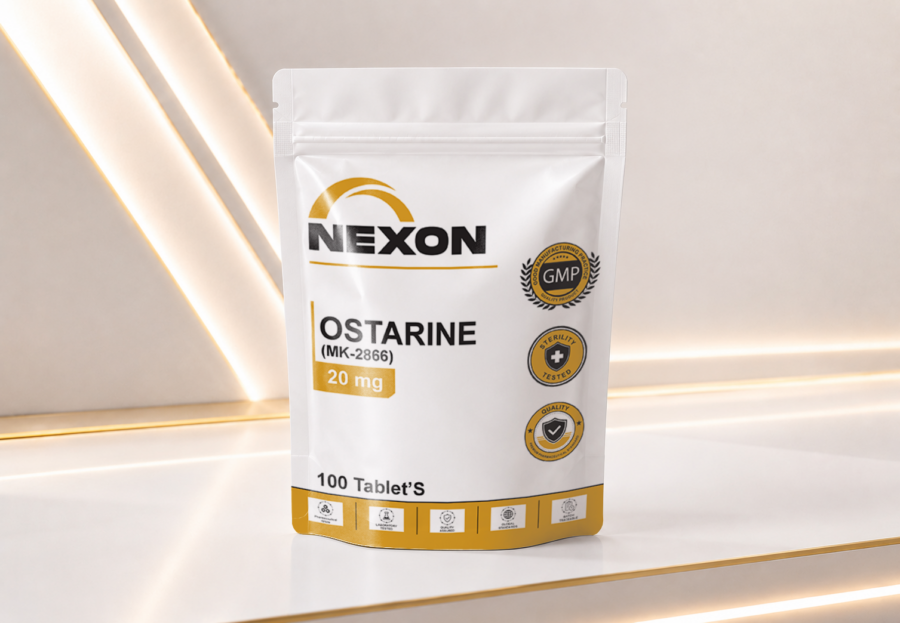
Ostarine
Ostarine, also known as MK-2866 and Enobosarm, is a non-steroidal selective androgen receptor modulator (SARM) developed to selectively activate androgen receptors in specific tiss…
- Dosage Form / Route Oral Administration
- Drug Class Selective Androgen Receptor Modulator (SARM)
Product Specifications
| Dosage Form / Route | Oral Administration |
|---|---|
| Composition | Ostarine (MK-2866) |
| Drug Class | Selective Androgen Receptor Modulator (SARM) |
This page is for product information only. NEXON does not sell products online through this website.
Scientific Profile
Detailed information
Introduction
Ostarine, also known as MK-2866 and Enobosarm, is a non-steroidal selective androgen receptor modulator (SARM) developed to selectively activate androgen receptors in specific tissues. Unlike traditional anabolic-androgenic steroids, Ostarine is not structurally derived from testosterone and does not belong to the steroid hormone class. Ostarine has been investigated primarily for its potential effects on: Skeletal muscle Bone tissue Physical function Lean body mass Its tissue-selective pharmacological profile distinguishes it from conventional anabolic-androgenic steroids.
NEXON
History
Ostarine was developed as part of research into selective androgen receptor modulators designed to provide anabolic activity while attempting to reduce some of the unwanted effects associated with traditional androgen therapy.
The compound became known during pharmaceutical research under the designation MK-2866 and was subsequently studied under the name Enobosarm.
Research involving Ostarine has focused on:
Muscle wasting Lean body mass Physical function Bone health Selective androgen receptor activation
Ostarine has also become widely discussed in sports and bodybuilding communities despite its investigational status.
NEXON
Chemical Structure
Ostarine is a non-steroidal selective androgen receptor modulator.
Unlike testosterone and other anabolic-androgenic steroids, Ostarine does not contain the characteristic four-ring steroid nucleus.
Its non-steroidal molecular structure contributes to its distinct pharmacological characteristics.
The compound was designed to interact selectively with androgen receptors while producing anabolic signaling in androgen-responsive tissues.
NEXON
Pharmacology
Ostarine selectively binds to the androgen receptor (AR).
Following oral administration, the compound enters systemic circulation and interacts with androgen receptors in androgen- responsive tissues.
Compared with conventional anabolic-androgenic steroids, SARMs were developed with the objective of producing more selective androgen receptor activity.
Ostarine has demonstrated anabolic activity particularly in:
Skeletal muscle Bone Other androgen-responsive tissues
NEXON
Mechanism of Action
The principal mechanism involves selective activation of the androgen receptor.
The general pathway includes:
- Oral absorption
- Systemic distribution
- Binding to androgen receptors
- Formation of receptor-ligand complexes
- Nuclear translocation
- Interaction with androgen-responsive elements
- Regulation of gene transcription
- Modulation of androgen-responsive cellular processes
The selective receptor activity of Ostarine distinguishes it pharmacologically from conventional anabolic-androgenic steroids.
NEXON
Pharmacodynamics
Ostarine produces its biological effects primarily through androgen receptor signaling.
NEXON
Pharmacokinetics
Ostarine is administered orally and undergoes systemic absorption following gastrointestinal administration.
After absorption:
The compound enters systemic circulation. Ostarine is distributed throughout the body. It interacts with androgen receptors in target tissues. Metabolic transformation occurs through hepatic and other enzymatic pathways. Metabolites are subsequently eliminated from the body.
The pharmacokinetic characteristics of Ostarine differ from those of esterified injectable anabolic steroids because it is a non-steroidal orally administered compound.
NEXON
Physiological Effects
Ostarine (MK-2866), also known as Enobosarm, is a non-steroidal selective androgen receptor modulator that produces its physiological activity primarily through selective activation of androgen receptors in skeletal muscle, bone, and other androgen-responsive tissues. Its receptor-mediated activity may influence protein metabolism, muscle tissue maintenance, lean body mass, and overall muscle function. Unlike conventional anabolic-androgenic steroids, Ostarine does not possess a steroidal structure and is not converted to estrogen through conventional aromatization pathways.In skeletal muscle, androgen receptor activation may affect cellular signaling involved in protein metabolism and tissue maintenance, which has led to research into Ostarine as a potential compound for preserving lean body mass and supporting physical function. Its activity in skeletal tissue may also influence bone remodeling and maintenance, making androgen receptor modulators an area of interest in research involving muscle and bone loss.Despite its selective mechanism, Ostarine can produce systemic endocrine effects. Androgen receptor activation may influence the hypothalamic-pituitary-gonadal axis and potentially alter endogenous androgen production and reproductive hormone signaling. Changes in lipid metabolism and liver-related laboratory parameters have also been observed in some investigational settings.Overall, the physiological profile of Ostarine is characterized by selective androgen receptor activity, potential anabolic effects on muscle and bone tissue, and possible endocrine and metabolic effects. Because Ostarine remains an investigational compound and is not an approved general therapeutic medication, its long-term physiological effects and safety profile have not been fully established.
NEXON
Clinical Applications
Ostarine (MK-2866) has been investigated primarily as an investigational selective androgen receptor modulator for conditions associated with loss of muscle mass and physical function. Clinical research has examined its potential to support the preservation or improvement of lean body mass, particularly in situations involving muscle wasting or age- related decline in physical performance. Its selective androgen receptor activity has also generated interest in potential applications involving skeletal health and maintenance of bone tissue.Research has evaluated Ostarine in areas such as muscle wasting, loss of lean body mass, age-related changes in muscle function, and conditions where maintaining muscle tissue may be clinically relevant. However, these investigations have not established Ostarine as a generally approved therapeutic treatment. Its clinical development and potential applications remain subject to ongoing evaluation of efficacy, safety, and long-term effects.
NEXON
Safety Considerations
The use of anabolic-androgenic steroids may require consideration of cardiovascular, hematological, hepatic, endocrine, metabolic, and reproductive health.
Important safety considerations include:
- Cardiovascular health
- Blood pressure
- Hematological parameters
- Lipid profile
- Liver function
- Endocrine function
- Reproductive function
- Prostate health
The overall safety profile depends on the specific compound, formulation, concentration, duration of exposure, individual response, and patient characteristics. Appropriate medical evaluation and regular monitoring should be considered when clinically indicated.
NEXON
Potential Adverse Effects
Potential adverse effects associated with anabolic-androgenic steroid exposure may involve endocrine, cardiovascular, hematological, hepatic, dermatological, reproductive, and metabolic systems.
- Endocrine Effects
- Suppression of endogenous hormone production
- Alterations in hormonal balance
- Changes in reproductive hormone signaling
- Potential suppression of spermatogenesis
- Cardiovascular Effects
- Changes in lipid profile
- Possible increases in blood pressure
- Potential cardiovascular risk
- Hematological Effects
- Changes in hematocrit
- Changes in hemoglobin
- Possible increase in erythropoietic activity
- Dermatological Effects
- Acne
- Increased sebaceous activity
- Androgen-related hair loss in genetically predisposed individuals
- Reproductive Effects
- Changes in reproductive function
- Potential reduction in fertility
- Alterations in reproductive hormone regulation
- Hepatic & Metabolic Effects
- Changes in liver function parameters
- Alterations in metabolic markers
- Changes in glucose and lipid metabolism
The occurrence and severity of adverse effects vary according to the specific compound, formulation, exposure, duration of use, individual response, and patient characteristics.
NEXON
Contraindications
Condition Reason Severe hepatic disease Increased hepatic risk Hormone-sensitive cancers Androgen receptor sensitivity Pregnancy Potential risk of fetal development Known hypersensitivity Allergic reaction Significant cardiovascular disease Potential cardiovascular effects
NEXON
Drug Interactions
A comprehensive interaction profile may not be established for every anabolic-androgenic steroid or formulation.
- Potential interactions or clinical considerations may exist with:
- Anticoagulants
- Antidiabetic medications
- Hepatotoxic medications
- Other anabolic-androgenic steroids
- Other hormonal therapies
- Drugs affecting lipid metabolism
The clinical significance of potential interactions depends on the specific compound, formulation, dosage, duration of exposure, concomitant medications, and individual patient characteristics. Appropriate medical evaluation should be considered when multiple medications or hormonal therapies are used concurrently.
NEXON
Laboratory Monitoring
Laboratory Test Purpose CBC Monitor hematological parameters
ALT / AST Liver function
Bilirubin Hepatic assessment
Lipid Profile Cardiovascular risk assessment
Blood Pressure Cardiovascular monitoring
Total Testosterone Assess androgen status
LH / FSH Assess endocrine suppression
NEXON
Storage & Stability
- Store according to official product labeling.
- Protect from excessive heat and direct sunlight.
- Do not freeze.
- Maintain original packaging integrity.
- Keep away from children.
- Inspect packaging before use.
NEXON
Product Authenticity
Every genuine NEXON product should include appropriate quality verification features.
Authentication may include:
- Batch number tracking
- Manufacturing information
- Expiration date verification
- QR authentication system
- Authorized distribution verification
emphasizes transparency, traceability, and product quality control.
NEXON
Frequently Asked Questions
What is Ostarine? Ostarine is a non-steroidal selective androgen receptor modulator developed to selectively activate androgen receptors in specific tissues.
What is another name for Ostarine? Ostarine is also known as MK-2866 and Enobosarm.
Is Ostarine a steroid? No. Ostarine is a non-steroidal SARM and does not have the characteristic steroid structure of testosterone and other anabolic-androgenic steroids.
Is Ostarine oral or injectable? Ostarine is an orally administered compound.
Does Ostarine aromatize? No. Ostarine does not undergo conventional aromatization to estradiol.
Can Ostarine affect natural testosterone production? Yes. Despite its selective mechanism, systemic androgen receptor activity can suppress the hypothalamic-pituitary- gonadal axis and reduce endogenous androgen production.
NEXON
Quality Commitment
is committed to maintaining high standards of manufacturing quality, product consistency, traceability, and scientific transparency.
Through quality control systems, authentication procedures, and responsible information sharing, NEXON aims to provide reliable pharmaceutical products and educational resources for healthcare professionals and informed users.
NEXON
Related
More in this category
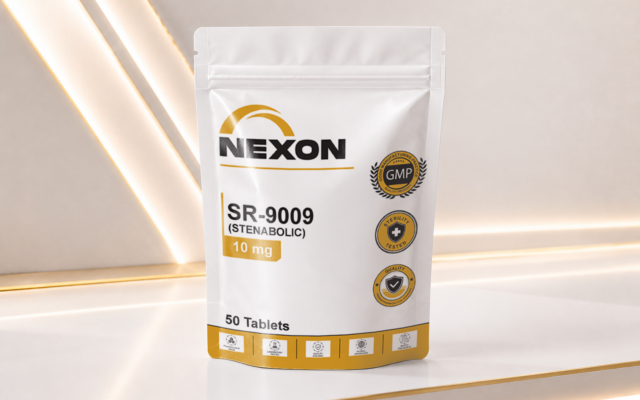
SR-9009
SR-9009, commonly known as Stenabolic, is an experimental synthetic agonist of the nuclear receptors REV-ERBα and REV-ERBβ, which play important roles in regulation of the circadia…
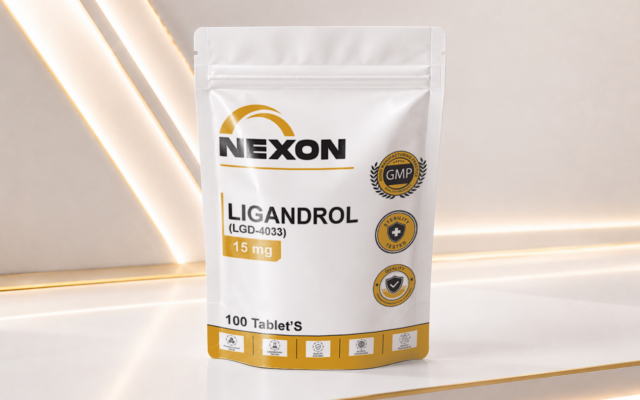
Ligandrol
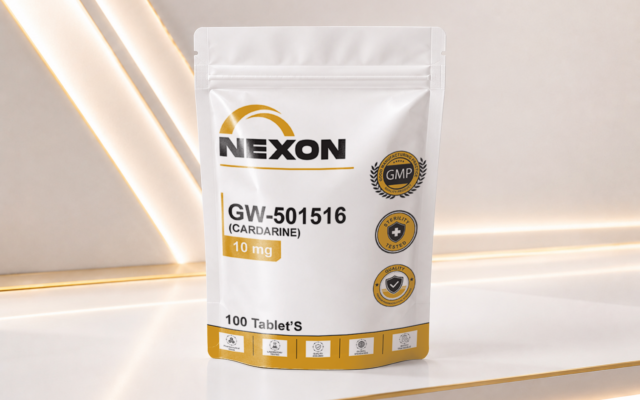
GW-501516
GW-501516, commonly known as Cardarine, is an experimental small-molecule agonist of the peroxisome proliferator- activated receptor delta (PPARδ). Unlike SARMs, anabolic-androgeni…