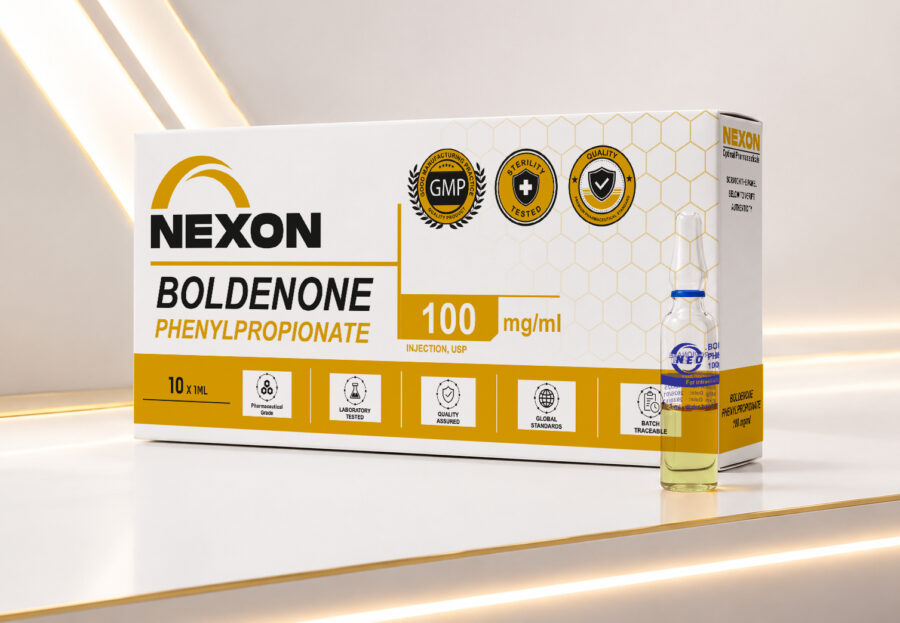
Boldenone Phenylpropionate
Boldenone phenylpropionate is an esterified anabolic-androgenic steroid derived from boldenone, also known as 1-dehydrotestosterone. The phenylpropionate ester increases lipid solu…
- Strength 100 mg/mL
- Dosage Form / Route Intramuscular Injection
- Drug Class Anabolic-Androgenic Steroid / Androgen Ester
Product Specifications
| Dosage Form / Route | Intramuscular Injection |
|---|---|
| Strength | 100 mg/mL |
| Composition | Boldenone Phenylpropionate (C28H34O3) |
| Drug Class | Anabolic-Androgenic Steroid / Androgen Ester |
| Chemical Formula | C28H34O3 |
This page is for product information only. NEXON does not sell products online through this website.
Scientific Profile
Detailed information
Introduction
Boldenone phenylpropionate is an esterified anabolic-androgenic steroid derived from boldenone, also known as 1-dehydrotestosterone. The phenylpropionate ester increases lipid solubility and supports an intermediate depot-release profile after intramuscular administration.
After release from an oil-based depot, esterases hydrolyze the molecule to active boldenone. The ester primarily modifies absorption and duration, while boldenone produces the principal androgen-receptor- mediated effects.
History
Boldenone was synthesized during twentieth-century research into anabolic-androgenic steroids. Esterification at the 17β-hydroxyl group was used to create injectable preparations with different release characteristics.
The phenylpropionate ester is expected to release more slowly than propionate but faster than longer- chain boldenone preparations such as undecylenate. Boldenone phenylpropionate remains far less established than boldenone undecylenate.
Published clinical documentation for this exact ester is limited. Its current availability, indications, legal classification, and regulatory status depend on the jurisdiction and the exact manufactured product.
NEXON • NANDROLONE DERIVATIVES • 2
Chemical Structure
Boldenone phenylpropionate is the 17β phenylpropionate ester of boldenone. Its molecular formula is C28H34O3 and its approximate molar mass is 418.58 g/mol.
The phenylpropionate group increases lipid solubility and produces an intermediate ester profile. Following ester hydrolysis, the active hormone released is boldenone.
- 1-Dehydrotestosterone steroid nucleus
- 17β phenylpropionate ester
- Oil-soluble injectable derivative
- Hydrolysis to active boldenone
- Intermediate depot-release characteristics
Pharmacology
Boldenone phenylpropionate functions as a depot prodrug of boldenone. Following intramuscular injection, the esterified compound is released from the oil vehicle and hydrolyzed by esterases.
Active boldenone enters target cells and binds to intracellular androgen receptors. The hormone-receptor complex influences transcription involved in protein metabolism, nitrogen balance, skeletal muscle, bone tissue, erythropoiesis, and reproductive physiology.
NEXON • NANDROLONE DERIVATIVES • 3 Boldenone Phenylpropionate → Depot Release and Ester Hydrolysis → Active Boldenone → Androgen- Receptor Activation → Androgen-Responsive Gene Expression
Boldenone can undergo aromatization, although estrogenic conversion is generally considered lower than with testosterone. Its additional 1,2-double bond alters metabolism relative to testosterone.
Mechanism of Action
The primary mechanism involves:
- Release from the intramuscular oil depot
- Enzymatic cleavage of the phenylpropionate ester
- Binding of boldenone to intracellular androgen receptors
- Regulation of androgen-responsive gene transcription
- Metabolic effects of the 1,2-double bond
- Potential aromatization to estrogenic metabolites
- Modulation of protein, nitrogen, bone, and hematological physiology
- The ester modifies exposure over time but does not change the identity of the active parent hormone.
Pharmacodynamics
- Androgen-receptor signaling
- Protein metabolism
- Nitrogen retention
- Erythropoiesis
- Bone metabolism
- Skeletal and connective-tissue physiology
- Reproductive and endocrine feedback
- Secondary androgen-responsive effects
Pharmacokinetics
Following intramuscular injection, boldenone phenylpropionate remains temporarily within an oil-based depot. Its ester structure supports an intermediate release profile between shorter propionate and longer undecylenate preparations.
Modern human pharmacokinetic data for this specific ester are limited. Its exact absorption rate and duration should not be assumed from data for boldenone propionate, cypionate, or undecylenate.
After hydrolysis, boldenone circulates bound to plasma proteins and undergoes hepatic and peripheral metabolism. Steroid metabolites are eliminated mainly through urine and other pathways.
Exposure depends on formulation, concentration, oil vehicle, injection site, administration technique, and individual physiology.
Physiological Effects
Boldenone activates androgen receptors and may influence protein metabolism, nitrogen balance, skeletal muscle, bone tissue, erythropoiesis, reproductive physiology, and other androgen-responsive systems. NEXON • NANDROLONE DERIVATIVES • 5 Its profile differs from testosterone because the additional 1,2-double bond alters metabolism and relative anabolic-androgenic behavior. Esterification changes the release pattern rather than the receptor target of the active hormone.
Supraphysiological or non-medical exposure can increase the likelihood of endocrine suppression, fertility impairment, lipid changes, fluid retention, cardiovascular complications, acne, and other androgen-related adverse effects.
Clinical Applications
Boldenone undecylenate has been associated primarily with veterinary applications. Evidence and regulatory status cannot automatically be transferred from undecylenate to the phenylpropionate ester.
Boldenone phenylpropionate is not a widely standardized contemporary therapeutic preparation, and modern clinical evidence for this exact ester is limited. Approval and availability must be evaluated by jurisdiction.
The displayed 100 mg/mL formulation is a fictional NEXON catalog presentation and should not be interpreted as an independently approved fixed-dose medicinal product.
Safety Considerations
Boldenone exposure requires consideration of cardiovascular, hematological, endocrine, reproductive, metabolic, prostate, hepatic, and psychological health.
Important safety considerations include:
- Cardiovascular health
- Blood pressure
- Hematocrit and hemoglobin
- Lipid profile
- Liver function
- Endocrine function
- Reproductive function and fertility
- Prostate health
- Sleep apnea risk
- Fluid retention
- Injection-site reactions
- The safety profile depends on formulation, concentration, duration of exposure, individual response, and
- patient characteristics. Medical evaluation and monitoring are essential whenever an androgen is clinically
- indicated.
Potential Adverse Effects
Potential adverse effects associated with boldenone and other anabolic-androgenic steroids may involve endocrine, cardiovascular, hematological, dermatological, reproductive, hepatic, metabolic, and psychological systems.
- Endocrine Effects
- Suppression of endogenous testosterone production
- NEXON • NANDROLONE DERIVATIVES • 6
- • Suppression of luteinizing hormone and follicle-stimulating hormone
- Alterations in estrogen and androgen balance
- Gynecomastia in susceptible individuals
- Testicular atrophy
- Potential suppression of spermatogenesis
- Cardiovascular Effects
- Changes in lipid profile
- Possible increases in blood pressure
- Fluid and sodium retention
- Potential thromboembolic complications
- Possible increase in cardiovascular risk
- Hematological Effects
- Increased hematocrit
- Increased hemoglobin
- Erythrocytosis or polycythemia
- Increased blood viscosity
- Dermatological Effects
- Acne
- Increased sebaceous activity
- Oily skin
- Androgen-related hair loss in genetically predisposed individuals
- Increased body or facial hair
- Reproductive Effects
- Reduced sperm production
- Changes in fertility
- Alterations in reproductive hormone regulation
- Changes in libido or sexual function
- Prostate-related effects
- Hepatic and Metabolic Effects
- Changes in lipid parameters
- Alterations in glucose metabolism
- Changes in liver-function parameters
- Fluid and electrolyte imbalance
- Changes in body composition
- Administration Related Effects
- Injection-site pain
- Swelling or irritation
- Inflammatory reactions
- Hypersensitivity to active ingredients or excipients
NEXON • NANDROLONE DERIVATIVES • 7 • Infection when administration is not performed under appropriate sterile conditions The occurrence and severity of adverse effects vary according to exposure, concentration, duration, individual response, underlying health conditions, and concurrent medications.
Contraindications
Condition Reason
Known or Suspected Prostate Carcinoma Androgen-sensitive disease may be stimulated
Known or Suspected Male Breast Carcinoma Potential androgen-sensitive malignancy
Pregnancy Androgen exposure may cause fetal harm
Breastfeeding Insufficient safety and potential hormonal exposure
Known Hypersensitivity Risk of allergic reaction to active ingredients or excipients
Unexplained Elevated Hematocrit Increased risk of erythrocytosis-related complications
Severe Uncontrolled Cardiovascular Disease Potential fluid, blood-pressure, and cardiovascular effects
Severe Hepatic or Renal Disease Potential fluid retention and impaired clinical tolerance
Drug Interactions
Potential interactions or important clinical considerations may exist with:
- Anticoagulants
- Insulin and antidiabetic medications
- Corticosteroids
- Adrenocorticotropic hormone
- Other androgenic or anabolic agents
- Medications affecting blood pressure
- Drugs influencing fluid and electrolyte balance
- Hormonal therapies
- Laboratory tests affected by androgen status
- Boldenone may affect anticoagulant response, glucose-control requirements, fluid retention, and selected
- laboratory measurements. The clinical significance depends on the specific medication, health condition,
- formulation, exposure, and individual response.
NEXON • NANDROLONE DERIVATIVES • 8
Laboratory Monitoring
Laboratory Test Purpose
CBC Monitor hematological parameters
Hematocrit / Hemoglobin Assess erythrocytosis
ALT / AST Liver-function assessment
Lipid Profile Cardiovascular-risk assessment
Blood Pressure Cardiovascular monitoring
Total Testosterone Assess testosterone exposure
Free Testosterone / SHBG Evaluate bioavailable androgen status
Estradiol Assess estrogenic conversion when clinically indicated
LH / FSH Assess hypothalamic-pituitary-gonadal suppression
PSA Prostate monitoring when clinically appropriate
Fasting Glucose / HbA1c Metabolic assessment
Storage & Stability
- Store according to official product labeling.
- Protect from excessive heat and direct sunlight.
- Do not freeze.
- Maintain original packaging integrity.
- Keep away from children.
- Inspect the solution and packaging before use.
- Do not use if the container is damaged or the solution shows unexpected contamination.
- Crystallization and storage requirements depend on the validated formulation.
Product Authenticity
Every genuine NEXON product should include appropriate quality-verification features.
- Batch-number tracking
- Manufacturing information
- Expiration-date verification
- QR authentication system
- Tamper-evident packaging
- Authorized-distribution verification
- NEXON emphasizes transparency, traceability, and product-quality control.
NEXON • NANDROLONE DERIVATIVES • 9
Frequently Asked Questions
What is Boldenone Phenylpropionate? It is a short-chain esterified injectable form of boldenone designed for release from an intramuscular oil depot.
What is the parent hormone? Ester hydrolysis releases boldenone, also known as 1-dehydrotestosterone.
What does 100 mg/mL represent? It is the fictional labeled concentration selected for this NEXON website catalog presentation.
Is Boldenone Phenylpropionate a peptide? No. It is an esterified steroid hormone in the anabolic-androgenic steroid class.
Is it a SARM? No. Boldenone is a steroidal androgen-receptor agonist, not a selective androgen-receptor modulator.
Is it oral or injectable? It is presented as an oil-based solution intended for intramuscular administration.
What does the phenylpropionate ester change? The phenylpropionate ester changes lipid solubility and depot release; hydrolysis still releases active boldenone.
Is it shorter acting than undecylenate? Its phenylpropionate ester suggests an intermediate release profile, although direct modern human data for this exact ester are limited.
Can it suppress natural testosterone production? Yes. Exogenous boldenone can suppress hypothalamic-pituitary-gonadal signaling, endogenous testosterone production, and spermatogenesis.
Is this specific NEXON formulation FDA approved? No. The displayed 100 mg/mL formulation is a fictional catalog item and is not presented as an independently FDA-approved medicine.
Quality Commitment
is committed to maintaining high standards of manufacturing quality, product consistency, traceability, and scientific transparency.
Through quality-control systems, authentication procedures, and responsible information sharing, NEXON aims to provide reliable pharmaceutical products and educational resources for healthcare professionals and informed users.
NEXON • NANDROLONE DERIVATIVES • 10
Related
More in this category
Trenbolone Enanthate Blend
Trenbolone Enanthate Blend is a concentrated injectable formulation containing trenbolone enanthate, trenbolone acetate, and trenbolone hexahydrobenzylcarbonate. The enanthate comp…
Trenbolone Hexahydrobenzylcarbonate Blend
Trenbolone Hexahydrobenzylcarbonate Blend is a concentrated injectable formulation containing trenbolone hexahydrobenzylcarbonate, trenbolone acetate, and trenbolone enanthate. The…
Trenbolone Base
Trenbolone Base is an unesterified anabolic-androgenic steroid formulation containing micronized trenbolone. Unlike esterified derivatives, the active molecule does not require est…