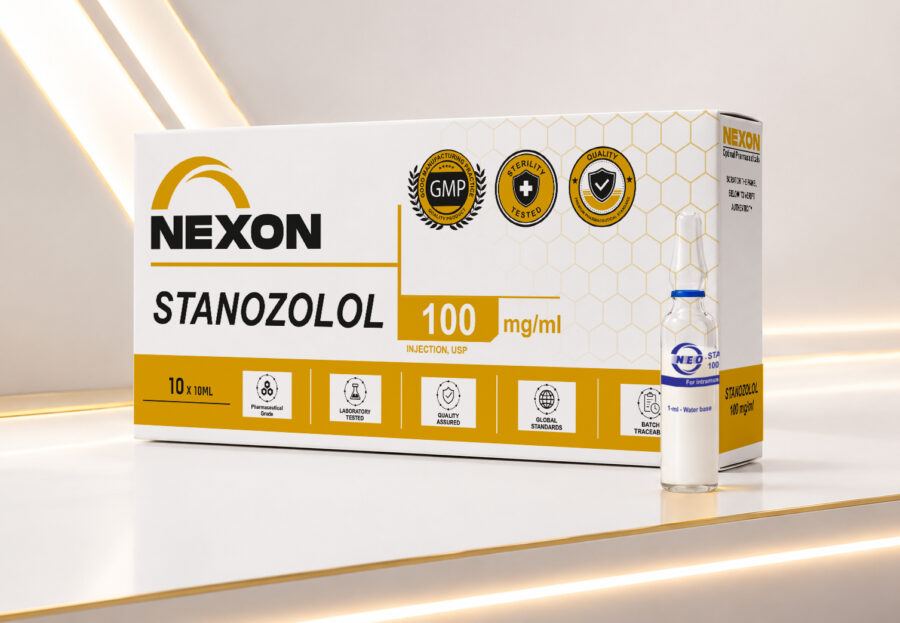
Stanozolol
Stanozolol is a synthetic anabolic androgenic steroid structurally derived from dihydrotestosterone (DHT).Unlike esterified injectable anabolic steroids, stanozolol is a non-esteri…
- Dosage Form / Route Oral Administration / Intramuscular Injection (Aqueous Suspension)
- Drug Class Anabolic Androgenic Steroid (AAS)
Product Specifications
| Dosage Form / Route | Oral Administration / Intramuscular Injection (Aqueous Suspension) |
|---|---|
| Composition | Stanozolol (C₂₁H₃₂N₂O) |
| Indications | Approved in selected countries for hereditary angioedema and historically investigated for selected catabolic conditions |
| Drug Class | Anabolic Androgenic Steroid (AAS) |
| Chemical Formula | C₂₁H₃₂N₂O |
| Molecular Weight | 328.49 g/mol |
| Half-Life | Oral: Approximately 8–9 Hours • Injectable Suspension: Approximately 24 Hours |
| Ester Type | None (17α-Alkylated DHT Derivative) |
This page is for product information only. NEXON does not sell products online through this website.
Scientific Profile
Detailed information
Introduction
Stanozolol is a synthetic anabolic androgenic steroid structurally derived from dihydrotestosterone (DHT).Unlike esterified injectable anabolic steroids, stanozolol is a non-esterified compound available in both oral tablets and aqueous intramuscular suspension.Its unique pyrazole ring modification differentiates it from most other anabolic steroids and contributes to its distinct pharmacological characteristics.As a DHT derivative, stanozolol does not undergo aromatization to estrogen and demonstrates pharmacological properties that differ from testosterone-derived anabolic steroids.Stanozolol has been extensively investigated in clinical medicine and sports pharmacology due to its oral bioavailability, injectable formulation, and well-characterized anabolic profile.
NEXON
History
Stanozolol was developed during pharmaceutical research aimed at producing an orally active anabolic steroid with improved anabolic properties and reduced estrogenic activity.
Following its introduction into clinical medicine, stanozolol was investigated for hereditary angioedema, selected catabolic disorders, tissue wasting, and disorders affecting connective tissue metabolism.
Its extensive scientific evaluation has contributed significantly to research involving:
Endocrine pharmacology Connective tissue physiology Protein metabolism Sports medicine
NEXON
Chemical Structure
Stanozolol is a synthetic derivative of dihydrotestosterone containing a fused pyrazole ring and a 17-alpha alkyl modification that enhances oral bioavailability.
Unlike esterified anabolic steroids, stanozolol does not require enzymatic ester hydrolysis before becoming biologically active.
Its molecular structure primarily influences:
Oral bioavailability Metabolic stability Androgen receptor affinity Pharmacokinetic characteristics
Following oral administration or intramuscular injection, biologically active stanozolol becomes available to interact with androgen receptors throughout the body. NEXON
Pharmacology
Following oral administration or intramuscular injection, stanozolol is absorbed into systemic circulation without requiring ester hydrolysis.
Once absorbed, stanozolol binds to androgen receptors located throughout multiple tissues including:
- Skeletal muscle
- Bone
- Bone marrow
- Connective tissue
- Skin
- Liver
- Reproductive tissues
As a dihydrotestosterone derivative, stanozolol does not undergo aromatization into estradiol.
Conversion Pathway Enzyme Product Stanozolol → Hepatic Metabolites Hepatic Enzymes Inactive Metabolites Aromatization Aromatase No Significant Conversion
NEXON
Mechanism of Action
Stanozolol produces its biological effects primarily through activation of intracellular androgen receptors.
The biological process includes:
- Stanozolol enters target cells.
- Stanozolol binds to androgen receptors.
- The receptor-hormone complex becomes activated.
- The activated complex translocates into the cell nucleus.
- Interaction with androgen response elements occurs on DNA.
- Gene transcription is regulated.
- Cellular protein synthesis and tissue-specific physiological responses are influenced.
Activation of androgen receptors contributes to:
- Protein synthesis
- Nitrogen retention
- Muscle tissue maintenance
- Bone remodeling
- Red blood cell production
- Connective tissue physiology
- Endocrine regulation
NEXON
Pharmacodynamics
Stanozolol affects multiple physiological systems through androgen receptor signaling.
NEXON
Pharmacokinetics
Following oral administration or intramuscular injection, stanozolol is rapidly absorbed into systemic circulation without requiring ester hydrolysis.
The oral formulation exhibits rapid gastrointestinal absorption, while the aqueous injectable suspension provides sustained absorption from the intramuscular injection site despite containing no ester.
Both formulations deliver biologically active stanozolol directly into systemic circulation.
NEXON
Physiological Effects
Normal stanozolol activity contributes to:
- Muscle Function
- Protein synthesis
- Nitrogen retention
- Maintenance of lean body tissue
- Muscle physiology
- Bone Health
- Bone remodeling
- Skeletal maintenance
- Bone metabolism
Clinical Applications
Stanozolol has been investigated and utilized for selected medical conditions involving hereditary angioedema, impaired protein metabolism, and selected catabolic disorders.
Clinical evaluation may include:
- Medical history
- Physical examination
- Laboratory assessment
- Individual pharmacological evaluation
Historical and investigational applications include:
- Hereditary angioedema
- Selected catabolic disorders
- Protein metabolism disorders
- Endocrine pharmacology research
NEXON
Safety Considerations
Stanozolol therapy requires individualized medical evaluation and regular monitoring.
Important considerations include:
- Cardiovascular health
- Blood parameters
- Endocrine function
- Liver and kidney function
- Lipid profile
- Individual physiological response
NEXON
Potential Adverse Effects
Possible adverse effects may include:
- Endocrine Effects
- Suppression of endogenous testosterone production
- Hormonal imbalance
- Alterations in endocrine function
- Dermatological Effects
- Acne
- Increased skin oil production
- Hair loss in genetically predisposed individuals
- Cardiovascular Effects
- Changes in lipid profile
- Increased blood pressure
- Hepatic Effects
- Elevation of liver enzymes
- Hepatic stress associated with 17α-alkylated oral administration
- Reproductive Effects
- Reduced fertility
- Suppression of spermatogenesis
- Hormonal suppression
- NEXON
Contraindications
Condition Reason Prostate Cancer Potential androgen sensitivity Male Breast Cancer Hormone-sensitive condition Pregnancy Risk of fetal virilization Severe Cardiac, Hepatic or Renal Disease Requires specialist evaluation Known Hypersensitivity Risk of allergic reaction
NEXON
Drug Interactions
Potential interactions may occur with:
Anticoagulants Stanozolol may influence anticoagulant response and require monitoring.
Antidiabetic Medications Changes in glucose metabolism may alter therapeutic requirements.
Corticosteroids Combined administration may influence fluid balance and metabolic parameters.
Other Hormonal Therapies Combined hormonal therapy requires professional medical supervision.
NEXON
Laboratory Monitoring
Laboratory Test Purpose CBC Assess blood parameters
Hematocrit Monitor red blood cell concentration
Hemoglobin Evaluate erythropoiesis
Liver Function Tests Assess hepatic health
Kidney Function Tests Evaluate renal function
Lipid Profile Monitor cardiovascular risk markers
Total Testosterone Evaluate endocrine status
Estradiol (E2) Assess hormonal balance
PSA (When Appropriate) Monitor prostate health
NEXON
Storage & Stability
- Store according to official product labeling.
- Protect from excessive heat and direct sunlight.
- Do not freeze.
- Maintain original packaging integrity.
- Keep away from children.
- Inspect packaging before use.
NEXON
Product Authenticity
Every genuine NEXON product should include appropriate quality verification features.
Authentication may include:
- Batch number tracking
- Manufacturing information
- Expiration date verification
- QR authentication system
- Authorized distribution verification
emphasizes transparency, traceability, and product quality control.
NEXON
Frequently Asked Questions
What is Stanozolol? Stanozolol is a synthetic anabolic androgenic steroid derived from dihydrotestosterone (DHT), available in both oral and injectable formulations.
Does Stanozolol convert to estrogen? No. Stanozolol is a DHT-derived anabolic steroid and is not a substrate for aromatase; therefore, it does not undergo meaningful conversion to estradiol.
Why is Stanozolol available as both an oral and injectable product? Unlike most injectable anabolic steroids, injectable stanozolol is formulated as an aqueous suspension rather than an esterified oil solution, allowing administration without esterification.
What medical conditions has Stanozolol been used to treat? Stanozolol has been approved or investigated for hereditary angioedema and has also been studied in selected catabolic disorders and conditions affecting protein metabolism.
Is Stanozolol hepatotoxic? The oral formulation contains a 17α-alkyl modification that may increase hepatic stress. Liver function monitoring is recommended during therapy.
NEXON
Quality Commitment
is committed to maintaining high standards of manufacturing quality, product consistency, traceability, and scientific transparency.
Through quality control systems, authentication procedures, and responsible information sharing, NEXON aims to provide reliable pharmaceutical products and educational resources for healthcare professionals and informed users.
NEXON
Related
More in this category
Trenbolone Enanthate Blend
Trenbolone Enanthate Blend is a concentrated injectable formulation containing trenbolone enanthate, trenbolone acetate, and trenbolone hexahydrobenzylcarbonate. The enanthate comp…
Trenbolone Hexahydrobenzylcarbonate Blend
Trenbolone Hexahydrobenzylcarbonate Blend is a concentrated injectable formulation containing trenbolone hexahydrobenzylcarbonate, trenbolone acetate, and trenbolone enanthate. The…
Trenbolone Base
Trenbolone Base is an unesterified anabolic-androgenic steroid formulation containing micronized trenbolone. Unlike esterified derivatives, the active molecule does not require est…